Strategy
Public relations messaging: writing that survives a hostile read
Messaging is a stress test, not a draft. One sentence has to survive legal review, a hostile reporter, and internal dissent before it reaches earned media.
What to take away
- Messaging is a stress test, not a drafting exercise. The sentence has to survive counsel, a reporter, and a colleague who disagrees.
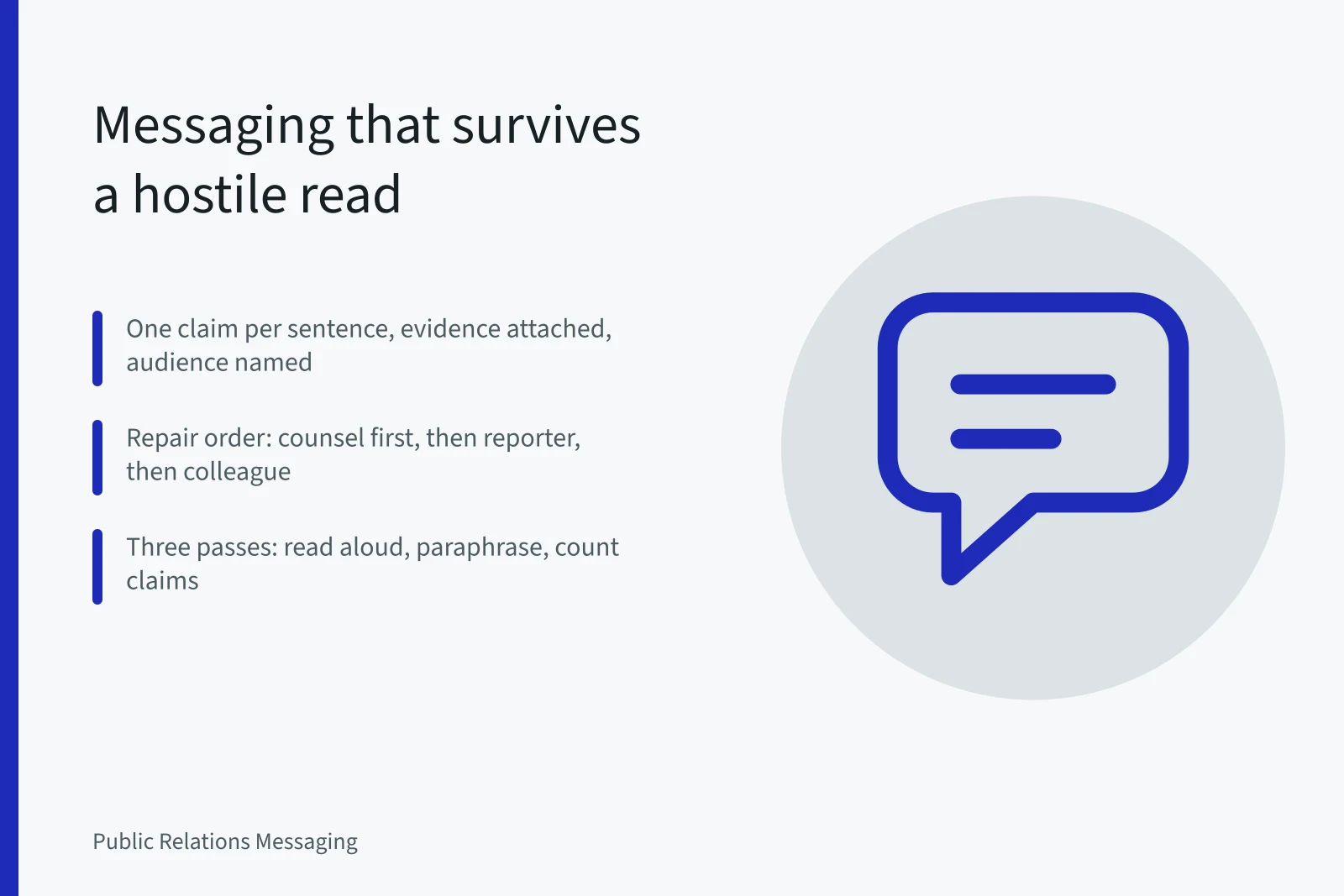
- Write one claim per sentence, attach the evidence, and name the audience.
- Test wording with a read-aloud pass, a paraphrase pass, and a claim count before any pitch.
- The surrounding choices matterstrategy sets the audience, tools carry the workflow, and discipline keeps the wording stable.
The hostile read test
Drafting produces sentences that sound fine to the person who wrote them. Hostile reading finds the sentence a plaintiff, a reporter, or an internal opponent can pull apart. Run that test while the wording is still yours to change.
Four steps, in order:
- Write the claim as one sentence with a clear subject and verb.
- Name the evidence and where a reader can find it.
- Read the sentence as counsel, as a journalist, and as a colleague who disagrees.
- Rewrite until all three stop asking the same question.
Most drafts fail at step three, because the writer never imagined a reader with a motive.
Where a sentence dies
Legal review removes adjectives that promise an outcome the company cannot prove. A journalist removes sentences with no number and no named source. An internal critic removes sentences that commit a team to work nobody approved.
Each failure has a different repair. Counsel wants a scope limit. The reporter wants attribution. The colleague wants an owner and a deadline. Fix all three before the pitch, not during it.
The repair order matters. Counsel goes first, because a legal cut changes the claim. The reporter test follows, because attribution changes the shape of the sentence. Internal owners come last, since they confirm delivery rather than meaning.
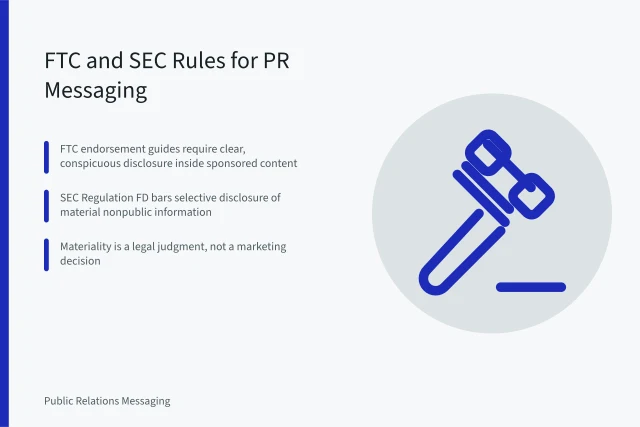
Public companies face a fourth reader: the market. A private aside to one analyst can count as selective disclosure, and the SEC investor bulletin on Regulation FD explains the limits.
Paid placements add a fifth. The FTC guidance on influencer disclosures requires material connections to be clear and conspicuous inside the content itself.
Example: one draft, three verdicts
One draft, three verdicts
Hostile reader
- Our product is the safest on the market.
- Counsel sees an unproven superlative.
- Sources say the deal is close.
- A reporter wants the source named.
- The team will handle all requests.
- A colleague sees unpaid overtime.
Repair
- Our product is the safest on the market.
- Name the test, the standard, and the lab.
- Sources say the deal is close.
- Attribute to a named executive or cut it.
- The team will handle all requests.
- Assign an owner and a response window.
If a spokesperson cannot repeat the sentence without notes, the sentence is not finished.
Message testing public relations
Message testing does not require a budget line. Three passes catch most problems.
- Read the sentence aloud and listen for the stumble.
- Ask three colleagues to paraphrase it back to you.
- Count the claims. More than one means the sentence should be split.
Keep the tested wording in one document that legal, communications, and the executive team all read. Version drift starts with three slightly different copies.
Message discipline in earned media
Earned media messaging lives on repetition without drift. The same three sentences should appear in the release, the briefing document, and the spoken answer. Journalists compare calls, and a shifted story reads as a correction.
A pitch that names the audience and the evidence gets read. A pitch that describes the company gets deleted.
Media training programs exist for this reason: they rehearse spokespeople on holding a line while staying human under pressure. Wikipedia describes media training content and typical providers.
Choosing the surrounding strategy
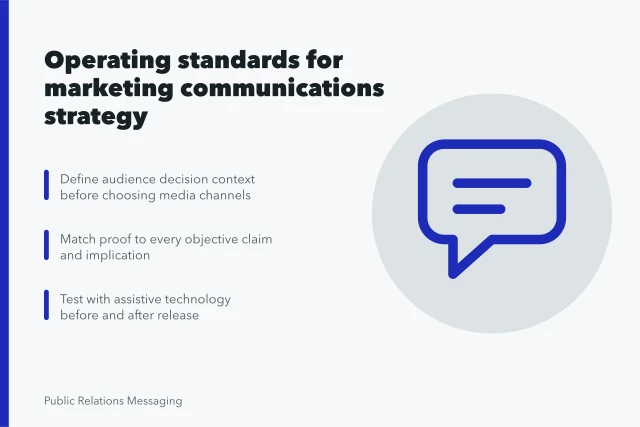
The sentence does not stand alone. A marketing communications strategy that ties audience evidence to business outcomes gives the sentence a job and a measurement.
The comparison work comes next. Do marketing communications strategy tools survive the comparison matrix? Check research fit, evidence control, workflows, accessibility, exports, security, retention, and exit before signing.
Public relations strategy sets the harder choices: which audiences matter, which narratives hold, which media relationships to build, and how readiness and governance are evaluated. Those decisions come before the wording, and they outlast it.