Strategy
PR measurement tools compared: what the dashboards leave out
A comparison of PR measurement tools by what they capture, what strategy needs, and what the dashboards leave out, with disclosure rules and a tool checklist.
What to take away
- Cision, Meltwater, Muck Rack, Brandwatch and Talkwalker count mentions, reach, sentiment and share of voice. None of them know whether the audience changed its mind.
- Advertising value equivalency still appears in dashboards, although the AMEC Barcelona Principles reject it as a way to value earned media.
- Tool choice follows the decision you must make, not the chart you enjoy looking at.
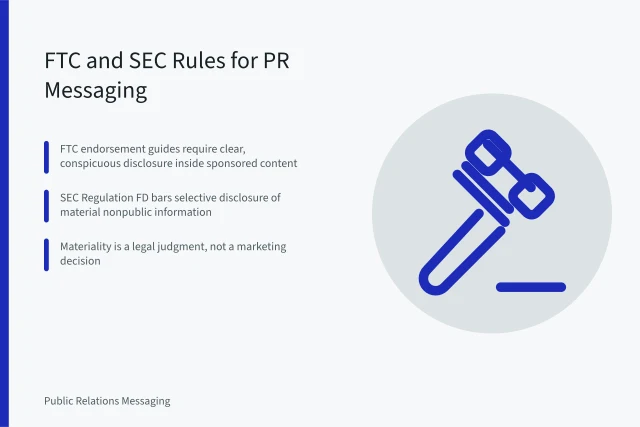
- FTC and SEC disclosure rules limit what you can claim about paid, influencer and investor-facing coverage.
What each dashboard actually counts
Most PR analytics software answers a counting question. How many mentions, from which outlets, reaching how many people, in what tone?
Captures well
- Media monitoring (Cision, Meltwater, Onclusive)
- Volume, outlet tier, share of voice, sentiment scores
- Social listening (Brandwatch, Talkwalker)
- Conversation themes, author reach, volume over time
- Web and search analytics (Semrush, Similarweb)
- Referral traffic, branded search, landing page behavior
- Coverage suites (Muck Rack, CoverageBook, Agility PR Solutions)
- Clippings, visuals, client-ready exports
Misses
- Media monitoring (Cision, Meltwater, Onclusive)
- Message pull-through, tone quality, journalist intent
- Social listening (Brandwatch, Talkwalker)
- Offline coverage, analyst notes, trade press
- Web and search analytics (Semrush, Similarweb)
- Story attribution, competitor narrative shifts
- Coverage suites (Muck Rack, CoverageBook, Agility PR Solutions)
- Anything you did not define before the campaign
The rows overlap, and vendors now sell across several of them. Pricing varies by seats, coverage and data history, so ask for a written quote against your own outlet list rather than a demo list.
Where the numbers stop matching the strategy
The AMEC evaluation framework, from the International Association for Measurement and Evaluation of Communication, separates outputs, outtakes, outcomes and impact. Most dashboards stop at outputs.
A launch can produce hundreds of articles and no change in consideration. The dashboard reports the articles. Nobody reports the flat consideration.
Sentiment scores also flatten the gap between a hostile mention in a trade blog and a neutral line in a national outlet.
Message pull-through is usually a manual read. Someone codes whether the article used your framing, your spokesperson or a competitor's framing.
If the dashboard decision rests on research fit, evidence control and exports, marketing communications strategy tools should be compared on those terms before any trial begins.
Example: one launch, three reports
A software company changed its pricing. Three teams reported on the same week.
One launch, three reports
- Communications exported mention counts and sentiment scores from a monitoring tool.
- Growth checked branded search and referral traffic in web analytics.
- Sales read call notes and coded churn reasons by hand.
The fourth measure, whether customers understood the change, came from interviews. No vendor sells that, and no dashboard asked for it.
Marketing communications strategy is what turns those separate reports into one set of choices about audience, message and channel.
Disclosure rules that shape the report
Paid placements need clear labels. The FTC native advertising guide explains when sponsored content must be identifiable as advertising, which decides whether a placement counts as earned coverage at all.
Under FTC guidance for influencer disclosure, a paid creator post is not an earned review.
For public companies, SEC guidance on Regulation FD limits selective disclosure to analysts and investors, so communications plans built before results need to respect it.
Disclosure rules do not sit outside measurement. They decide what a number is allowed to mean.
Choosing between PR measurement tools
- Does the tool capture the outlet tier and the journalist you actually pitch?
- Can you export raw data, or only a locked PDF?
- What is the contract length, and what happens on exit?
- Does it cover the languages and regions you work in?
- Can you audit how sentiment is scored?
Ask for a trial that uses your own outlet list, not the vendor's clean demo data.
Two more questions decide the rest. Who owns the numbers after the campaign ends, and who may change the definitions?
Because public relations strategy sets the choices that measurement then tests, tool selection should follow the plan rather than lead it.