Costs
Part of Getting media relations right the first time
Diagnosing the real bottleneck behind weak media relations
how to improve media relations starts with beat research, accurate story files, prepared experts, deadline-aware service, fewer pitches, and measured learning.
What to take away
- Diagnose fit, timing and clarity before adding names to the list.
- A one-page story file carries the news line, sourced facts and a named contact.
- One person holds same-day fact authority, with two backups.
- Run a 30-day cycle against reply rate, deadlines and corrections.
- Track relationship quality beside coverage.
Find the failure point first
Most teams with flat reply rates have a research problem, not a sending problem. More software and longer lists amplify weak targeting.
| Signal | Likely issue | First repair |
|---|---|---|
| Low response | Weak fit, timing, sender trust or unclear story | Check the beat, rewrite the opening line |
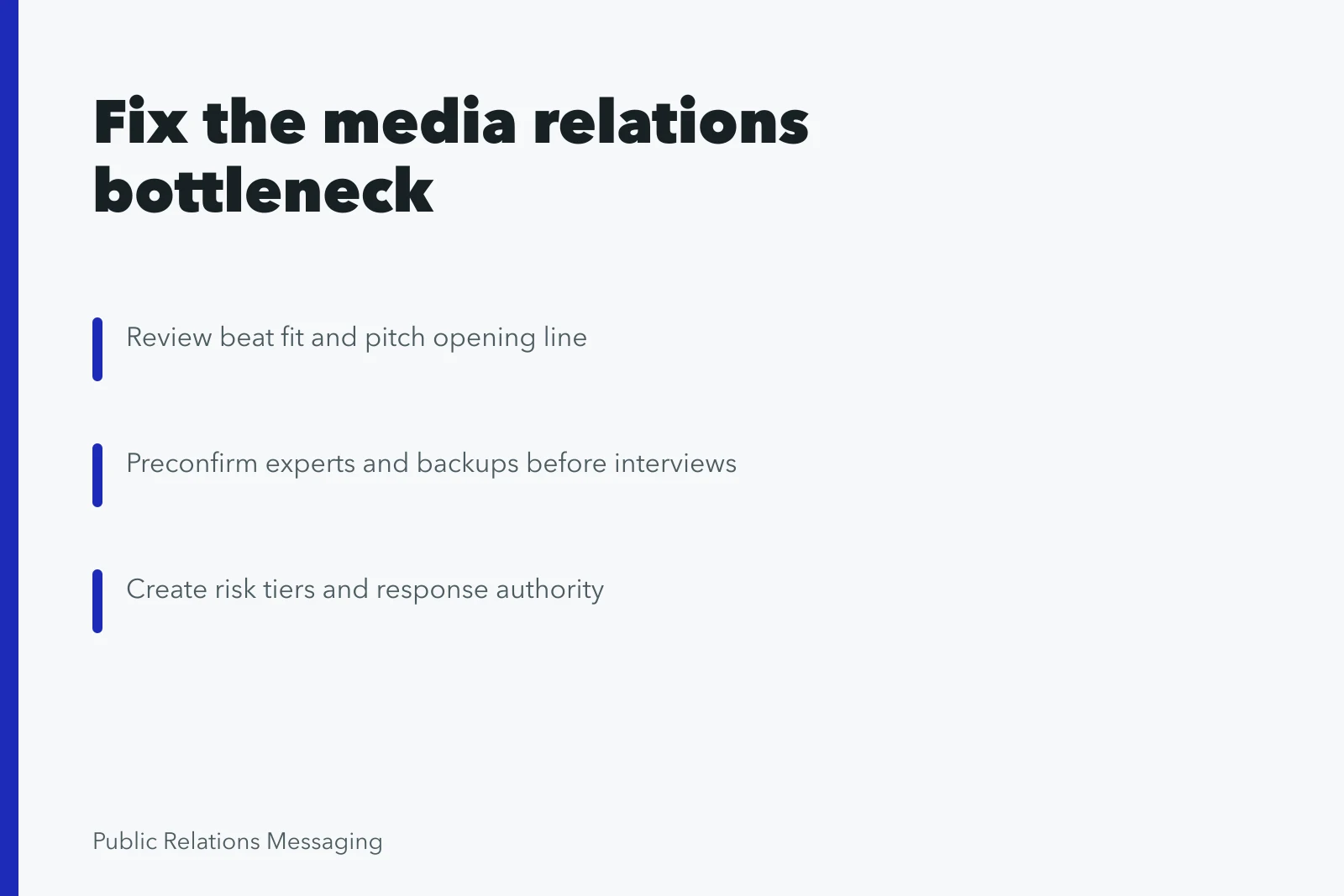
| Interest but no interview | Source or scheduling friction | Preconfirm experts and backups |
| Coverage with errors | Fact file or explanation is unclear | Supply traceable evidence and definitions |
| Late answers | Approvals are slow | Create risk tiers and response authority |
| Many corrections | Version control is weak | Keep a release record and live source page |
| Traffic but poor fit | The story sets the wrong expectation | Align message, destination and service |
| Opt-outs or complaints | Outreach is irrelevant or excessive | Narrow lists and honor suppression |
The seven repairs, in order:
- Reduce the contact list to verified current relevance.
- Write the news line before the subject line.
- Attach facts to named sources.
- Prepare experts for direct answers and follow-up.
- Set response ownership and backup coverage.
- Keep promises and correct errors quickly.
- Review relationship quality beside coverage output.
Audit twenty recent interactions before you change any tool.
- Pick twenty pitches from the last quarter and score each one.
- Read the journalist's work from that period before judging the pitch.
- List every request for data the team could not answer within a day.
- Rank the failure modes by how often each one appears.
A low reply rate often points at a weak story. Editors decline pitches because nothing changes for their readers.
The overview of media relations treats pitching and relationship building as one two-way practice. That is the standard to judge your own list against.
If the team is rebuilding from scratch, the step order in getting media relations right prevents a wasted quarter of list building.
Example: a complete story file
A story file fits on one page and travels with every pitch. It holds:
- The news line in one sentencethe change, the date and who it affects.
- Five facts, each attached to a named document or source.
- Two confirmed sources, with direct numbers and time zones.
- One approved quote and the likely objection with a one-line answer.
- The named contact who confirms facts the same day.
Write the news line before the subject line. If the news line is weak, the subject line only advertises that.
Rewritten for format, with placeholders standing in for real details:
Weak: "Agency announces service improvements."
Strong: "[Agency] adds [number] buses to the [route] on [date], cutting peak waits from [x] to [y] minutes."
The second version names the change, the date and the effect. A reporter can judge newsworthiness in one pass.
If three pitches fail for the same reason, the fault usually sits upstream of the writing, and public relations strategy mistakes shows how one root decision keeps producing them.
Assign ownership and response authority
Name one person who owns facts and can answer within the working day. Name two backups for leave and travel.
Write approval tiers so a routine figure needs one signature and a legal claim needs two.
Where approvals stall, decisions default to silence.
Targets for a 30-day cycle
Run one cycle with five verified journalists, one complete story file and two confirmed sources.
| Metric | How to count it | 30-day target |
|---|---|---|
| Reply rate | Replies divided by pitches sent | 15 to 25 percent |
| Deadline hit rate | Substantive answers before the stated deadline | 90 percent or higher |
| Correction count | Factual fixes requested after publication | Zero |
| Source lead time | Working days between confirmation and pitch | Two or more |
| Opt-out rate | Removals per hundred contacts | Under two |
Set numbers for the work, not only for the activity. Week one is diagnosis, week two is outreach, weeks three and four are follow-up and review.
These figures are goals for your own cycle, not published averages. The items worth keeping after the cycle ends appear in the public relations strategy checklist.
Prepare spokespeople, then handle deadlines and corrections
Training covers message discipline, bridging and hostile questions. Full-day workshops are the common format.
Typical fees run from about 1,500 to 8,000 US dollars per day depending on the provider and the group size.
Media training describes the usual content and provider types, which helps when you compare quotes.
Then handle the unglamorous parts. Acknowledge an inquiry within the hour and confirm the real deadline. Give an honest time for a substantive answer.
Correct errors within 24 hours of learning about them. Honor opt-outs within one business day.
Prepare two answers the spokesperson can give without checking: the cause and the next step.
Disclosure belongs to the same discipline. Paid placements and influencer content must be identifiable as advertising, and the FTC native advertising guide explains what that requires.
Log every correction with its cause, so the next story file carries the fix.
The questions that stall teams before any of this starts are collected in common media relations questions.