Strategy
Part of Public relations strategy: the choices that shape everything else, 2027 edition
Reading public relations strategy trends with a sceptical eye, updated for 2027
News influencer partnerships need audience evidence, disclosure terms and a correction path before any contract is signed, even as 2027 trend lists multiply.
What to take away
- Pew found 21 percent of surveyed U.S. adults regularly get news from news influencers, a figure bounded by its sample and platform list.
- Vetting a creator means checking who else their audience follows, what commercial relationships they hold, and who controls the account.
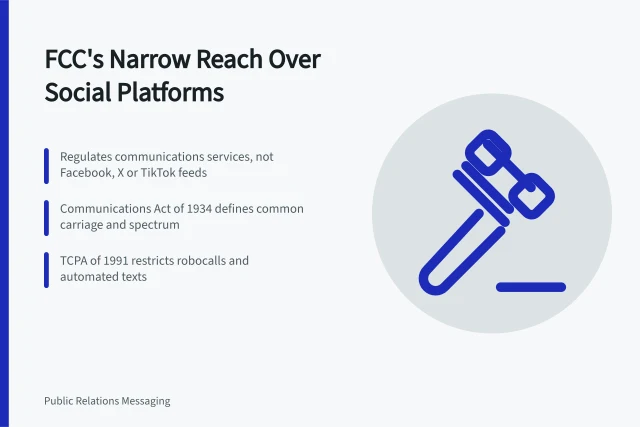
- The FCC's 2024 ruling treats AI-generated voices in robocalls as artificial under the Telephone Consumer Protection Act, a U.S. calling rule and nothing wider.
- Every partnership needs a named owner, a disclosure line, and a correction path agreed before the first post runs.
- A trend earns a place in the plan only when it carries a date, a source and a decision trigger.
Public relations strategy work now runs through people who were never on a media list. Pew Research Center's 2024 study of America's news influencers found 21 percent of surveyed U.S. adults regularly got news from such figures. The number is real and narrow: it describes that sample, those platforms and that period.
What creator vetting actually checks
Audience overlap comes first. Ask the creator for platform analytics showing where their followers sit, then compare that against your own first-party data. A large following in a region you do not serve is a cost, not a reach number.
Creator vetting checks
- Audience overlapplatform analytics vs first-party data
- Commercial conflictssponsor and affiliate list
- Account controllogin holder and deletion rights
- Correction pathnamed contact and escalation
- Objectives, publics and disclosure settled first
Then the commercial picture. List every sponsor, affiliate arrangement and owned product the creator carries. A creator who already promotes a competitor is not disqualified, but the conflict belongs in writing before negotiation starts.
Account control matters more than most teams expect. Ask who holds the login, who can publish without review, and who can delete a post at 2am. If the answer is an agency you have never met, the correction path runs through a stranger.
Before any of this reaches a contract, work through the common public relations strategy questions on objectives, publics and disclosure. They take an afternoon and settle most arguments.
Disclosure, rights and the synthetic voice line
FTC endorsement rules require a clear and conspicuous disclosure of a paid relationship. Put the required wording in the contract, not in a briefing call, and check the first three posts yourself.
Rights are separate from disclosure. Confirm in writing whether you can reuse the creator's footage, for how long, and on which channels. A clip that lives on their feed and nowhere else is rented attention.
Synthetic audio carries its own rule. The FCC's 2024 notice that AI-generated voices in robocalls are illegal records a declaratory ruling that such voices count as artificial under the Telephone Consumer Protection Act. It covers U.S. robocalls. It does not classify every synthetic-media use, and it is not legal advice. Route specific questions to qualified counsel.
| Check | Evidence to hold | Owner |
|---|---|---|
| Audience overlap | Platform analytics plus your own data | Comms lead |
| Commercial conflicts | Sponsor and affiliate list, signed | Procurement |
| Account control | Named publisher and deletion rights | Comms lead |
| Disclosure wording | Contract clause and first posts | Legal review |
| Reuse rights | Licence term, channels, territory | Legal review |
| Correction path | Contact, hours, escalation name | Partnership owner |
Keep a dated watchlist
A trend register earns its keep when each line carries a source date, an observed signal, an owner and a decision trigger. Anything without those four is a headline.
When AI touches your public relations planning, the NIST AI RMF Playbook sets out voluntary risk actions under govern, map, measure and manage. It is a framework, not a ranking or a forecast.
The W3C Privacy Principles statement supplies shared privacy concepts for web systems and warns against pushing that work onto individuals.
Read it alongside your own jurisdiction's rules: the Charter of the French Language in Quebec, the CRTC and Bill C-11 in Canada, and the FTC in the United States each set different obligations. Confirm current requirements with the regulator or counsel.
Common questions
Should a PR team work with news influencers?
Only after eight areas have been reviewed and written down. The areas are:
- audience relevance
- identity
- evidence
- independence
- commercial terms
- disclosure
- content rights
- measurement The Pew figure shows the audience exists; it says nothing about whether a particular creator fits your publics.
How often should the trend register change?
On a fixed cadence, and immediately when new evidence, platform behaviour, regulation or your own exposure shifts. A register nobody dates is a clipping file.
What breaks a creator partnership fastest?
An undisclosed paid post, or an account the brand cannot reach when something goes wrong. Both are preventable at contract stage and expensive afterwards.