Reviews
Part of Getting media relations right the first time
What makes a media relations standard actually observable?
media relations best practices center on relevance, facts, direct answers, source readiness, editorial independence, deadline service, disclosure, and correction.
What to take away
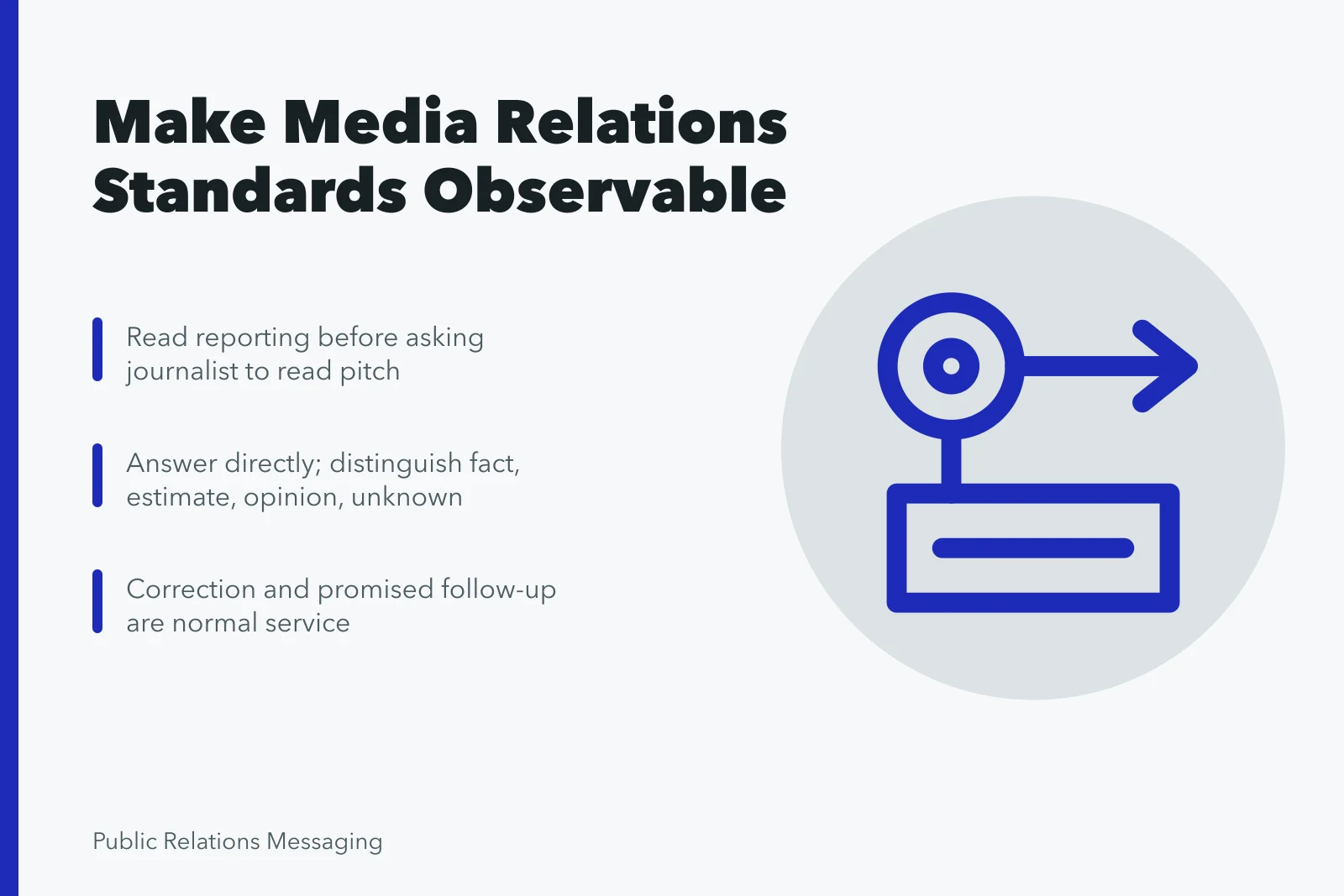
- Read the reporting before asking a journalist to read the pitch.
- Answer questions directly and distinguish fact, estimate, opinion, and unknown.
- Make correction and promised follow-up part of normal service.
Media relations best practices describe repeatable professional behavior. They do not guarantee favorable reporting, and they do not override confidentiality, privacy, court, employment, market disclosure, or safety duties. Match the process to the actual issue and get qualified review where needed.
Use an observable standard
| Practice | What the team does |
|---|---|
| Relevance | Documents why the story fits this beat and audience now |
| Accuracy | Traces material claims to dated evidence and an owner |
| Clarity | Explains terms, method, comparison, conditions, and limits |
| Access | Offers qualified people or inspectable records when appropriate |
| Service | Confirms deadlines and fulfills promised follow-up |
| Independence | Does not demand favorable framing, quote approval, or coverage |
| Disclosure | Identifies the organization and material relationships |
| Correction | Repairs errors promptly and visibly |
| Learning | Uses questions and results to improve conduct and communication |
- Use one accountable response owner
- Keep dates and qualifications near each claim
- Give assets descriptive filenames, rights, captions, and contacts
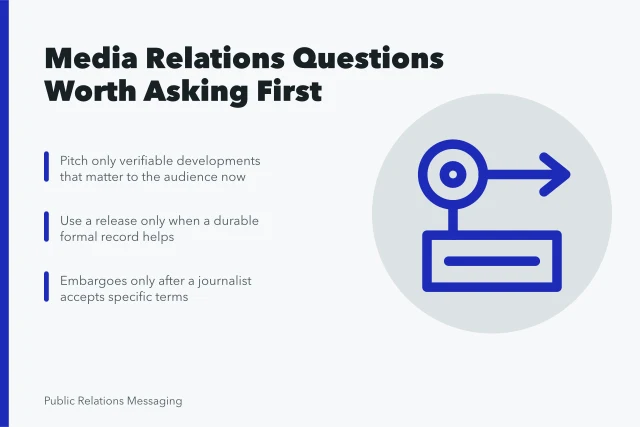
- Confirm any ground rules before the exchange
- Protect a journalist's independent editorial role
- Deliver promised records before the deadline
- Correct both the source page and exposed audience when needed
Prepare a source to communicate knowledge, not to perform a slogan. Review the audience, outlet, likely questions, confirmed facts, uncertainty, competing interpretation, sensitive areas, and follow-up route. Practice short sentences and accurate examples. Tell the source to pause and verify rather than guess.
CDC's field epidemiology chapter on communicating during an investigation discusses media interview preparation and public information needs. Its emergency health context limits direct transfer to routine corporate interviews.
Do not treat a reporter's question as an attack simply because it challenges the preferred frame. Identify the underlying information request, answer what can be confirmed, provide evidence, state a legitimate limit, and offer a specific follow-up. A bridge should connect an answered question to useful context, not evade it.
A physician guide on working with health care reporters recommends clarifying the outlet, audience, interview purpose, deadline, and scheduling route.
Assign the practice
The NIST Privacy Framework starting guide outlines a voluntary process for identifying and managing privacy risk. Use it to assign data and response owners for media relations best practices; it is not legal clearance.
The CISA business-system logging guidance explains how event records support security review. Preserve appropriate media relations best practices access, change, failure, and correction records without claiming that logging validates a metric.
Turn each practice into an owner, cadence, input, output, acceptance test, and correction path. Observe the work during a normal reporting cycle and during one controlled failure. Keep the result with the metric definition and decision record. A written policy has little value when access changes, source defects, and disputed conclusions leave no trace that another reviewer can follow.
For example, a normal reporting cycle runs from a reporter's first query to the published item or correction. The owner logs the question, source date, answer, and promised follow-up.
A controlled failure could be a wrong figure sent to a reporter; the team traces the source, corrects the record and the published item, and notes the failed check. That is the acceptance test in action.
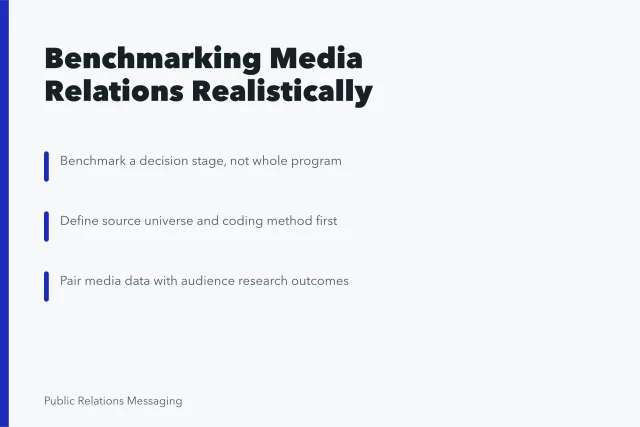
Use a short record: practice, owner, cadence, acceptance test, and correction path. Measure the standard by correction closure and by whether a reviewer can follow each decision from the record. A media relations checklist lists these fields for each practice.
Common questions
Should a spokesperson memorize messages?
They should understand the facts, intended meaning, evidence, limits, and public need well enough to answer naturally and accurately.
Is it acceptable to decline an interview?
Yes. Make a deliberate decision, communicate it promptly, and offer an appropriate factual route when one is available.
Should every error lead to a public correction?
Assess materiality, exposure, and harm. Correct the controlled record, then notify the affected audience through a proportionate route.