Careers
5 notes on beauty expert analysis reviews worth reading
Beauty expert analysis reviews follow the money: how a quote gets into an article, who supplied it, and six ways to tell a sought quote from a placed one.
A sentence attributed to an expert arrives in an article by one of about four routes, and only one of them involves a journalist deciding they needed that person specifically.
This page is about the other three. It is not an accusation against anybody quoted, most of whom are saying what they think. It is a description of a supply chain that is almost never mentioned in the pieces it produces.
What to take away
- Quotes are supplied as often as they are sought, and a supplied quote usually arrives alongside the product it happens to mention.
- The route a quote took is frequently visible in the sentence itself, once you know what to look for.
- None of this makes a quoted person dishonest. It makes the piece an assembly rather than a report, which changes what it can support.
The four routes
One: the journalist sought this person. They had a specific question and went to somebody qualified to answer it. This produces the best material and it takes the most time, which is why there is less of it.
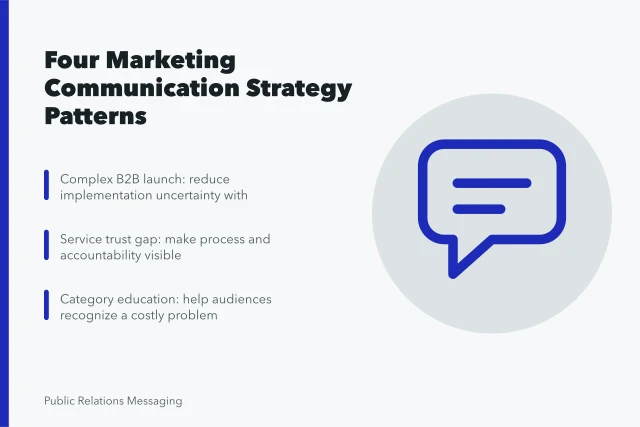
Four routes to a quote
- Journalist sought the person
- PR agency offered the person
- Query service supplied the quote
- Quote written to be reused
Two: a public relations agency offered the person. An agency represents a clinic, a brand or a practitioner and pitches them as a source, usually with a topic already attached. The quote is genuine and the agenda arrived with it.
Three: a query service supplied the quote. A journalist posts a request, dozens of people answer, and the fastest usable answer is published. Nobody chose the expert; the expert chose the article.
Four: the quote was written to be reused. A prepared paragraph circulates and appears, near-identical, across many outlets. It is a press release with a person's name on it.
Six signals of a supplied quote
- A product or clinic is named in the quote itself.Sought quotes rarely name anything, because the journalist asked about a subject rather than about a brand.
- The quote answers a question nobody in the piece asked.It sits slightly to one side of the argument, because it was written for a different article.
- The same sentence appears elsewhere.Search a distinctive phrase from it. Identical wording across outlets means one origin, copied.
- The credential is described rather than named."A leading skin expert" is a description. A protected title with a register behind it is a fact, and the difference is set out in beauty expert analysis.
- The interest is not stated.Who employs this person, and does that business sell what the quote discusses? Where a commercial relationship is behind published material there are rules about saying so, collected in the Federal Trade Commission's endorsement questions and answers.
- The quote is confident about a stranger.The clearest signal of all, because no route to publication makes that assessment possible.
What each route can support
| Route | What the quote can support | What it cannot |
|---|---|---|
| Sought | General information within the person's field | Anything about a specific person nobody examined |
| Agency supplied | The same, with an interest attached to it | An impartial comparison between options |
| Query service | Whatever the person happened to know quickly | Depth, because nobody checked who answered |
| Prepared text | The existence of a marketing campaign | Anything at all |
Notice that the top row and the bottom row have the same ceiling on the second column. No sourcing route rescues a claim about a face nobody examined, which is the specific failure examined in beauty expert analysis trends 2027.
Why the supply chain exists
Because there is more space to fill than there is time to fill it, and a supplied quote is free. That is not a conspiracy, it is a budget, and it explains most of what you read in this category without needing anybody to be acting badly.
The consequence for a reader is narrow. A piece assembled from supplied material is a survey of who was available, not of what is known. Reading it as the second thing is the error, and the wider version of that mistake is in beauty expert analysis mistakes.
What to do with a piece that fails several signals
Read it for what is being marketed, which is genuinely informative, and take nothing from it about your own case. Then, if a question remains, take that question to somebody who can examine you.
If you have no doctor to raise it with, the National Library of Medicine has a plain guide to choosing a primary care provider, and that appointment answers more than any number of quoted paragraphs. The framework around a treatment decision is in hair transplants.
Common questions
Is a quote from an agency automatically worthless?
No. Agency-supplied experts are frequently well qualified and often say sensible things. The point is that the selection was made by somebody with an interest, so the piece surveys one set of options rather than the field.
How do I check whether a quote was reused?
Search a distinctive eight-word phrase from it, in quotation marks. It takes ten seconds and it settles the question more often than you would expect.
Should I distrust every article that names a product?
Not distrust, but read it as advertising-adjacent and check anything you would act on. What an outlet's own standards look like when they exist is in best beauty expert analysis brands 2027.
Does any of this apply to clinic marketing?
Directly. A quoted practitioner in a clinic's own material is the clinic speaking, and the checks that matter there are on the register rather than in the copy: see before and after timelines for why the accompanying imagery adds nothing.